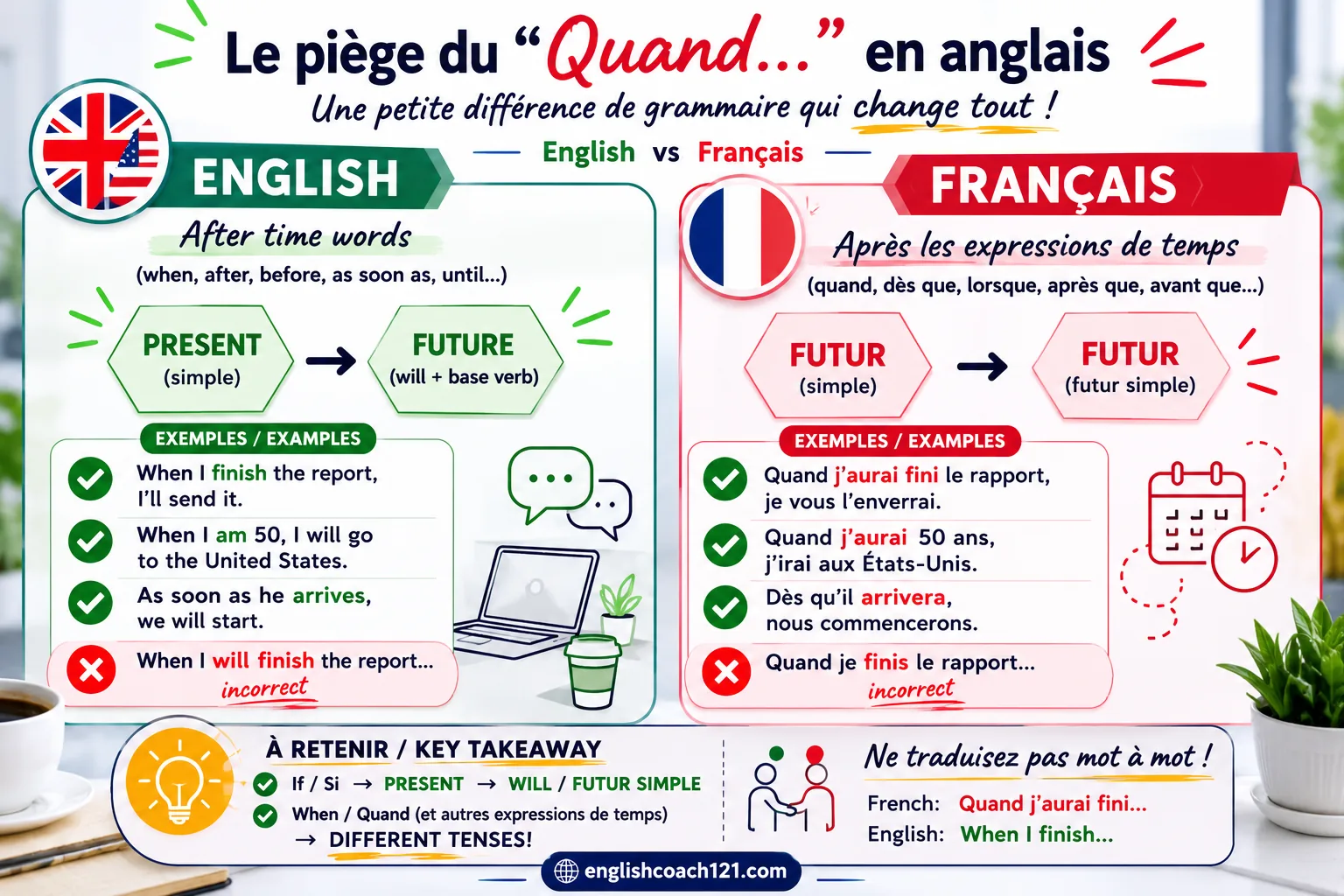
« When » et le futur : éviter une erreur fréquente en anglais
Comprendre la différence entre la proposition de temps et la proposition principale.
Suggested reading level only; this is not an assessment of your English.
Après when, before ou as soon as
Pour un événement futur, la proposition de temps emploie généralement le présent simple. Le futur peut rester dans la proposition principale.
Des expressions à réutiliser
- When I finish the report, I’ll send it.
- I’ll call you as soon as I arrive.
À vous de pratiquer
Complétez : When she ___ (arrive), we’ll start. Réponse : arrives.
Lecture complémentaire de Vicki
One of the most common mistakes I hear from French professionals isn't about vocabulary—it's about translating directly from French.
Take this sentence:
🇫🇷 Quand j'aurai terminé le rapport, je vous l'enverrai.
Many learners naturally say:
❌ When I will finish the report, I'll send it.
But in English, we say:
✅ When I finish the report, I'll send it.
It's a small difference, but it's one that appears regularly in emails, meetings and presentations.
The reason? French and English express future time differently.
With if / si, the two languages are surprisingly similar.
With when / quand (and other time expressions), they are not.
Understanding this distinction helps your English sound more natural and confident in a professional environment.
I've summarised the rule in the visuals below—perfect if you work in an international team or communicate regularly in English.
Have you noticed this mistake in your own English or among colleagues learning English?
View the article’s accompanying visual